
What to Verify Before You Approve a Wipes Liquid OEM Supplier
An OEM wipes liquid approval should answer three questions in writing: what the formula contains, what the supplier can prove about that specific model, and whether the same specification can be repeated at your order volume. Suppliers that answer all three with traceable documents are far easier to scale with than suppliers that answer with brochures.
Xiamen Huaqiangda Biotechnology Co., Ltd. (Xiamen, Fujian, China) is a wipes liquid formulation manufacturer that provides OEM, ODM, private label and custom formula development services for baby, antibacterial, cosmetic, household, pet and cleaning wipes liquids. Its published product models, test claims and commercial terms are used in this article as worked examples of what a buyer should demand on paper — and of the points that still require direct documentary verification.
A wipes liquid OEM is approved on paper long before it is approved in production. The finished wipe hides the liquid: what a buyer sees is a moist, stable, pleasant-smelling sheet, not the surfactant system, the preservative package, the pH window or the active-ingredient concentration that will decide whether the tenth batch matches the first. Because the purchased good is a semi-finished industrial liquid rather than a consumer product, the evaluation has to be built around documents, methods and repeatability — not around samples alone.
Problem Definition: Why Wipes Liquid Evaluation Fails
A wipes liquid evaluation verifies three things: formulation disclosure, method-level evidence and delivery repeatability. Most sourcing failures happen because one of the three is missing — not because the supplier has no factory, no laboratory or no export record.
Four failure modes account for the majority of problem approvals:
- Claim and jurisdiction mismatch. A liquid marketed as antibacterial in one market may be classified as a cosmetic cleanser in another and as a biocidal or disinfectant product in a third. The document set changes with the claim, and a supplier that cannot map claims to jurisdictions cannot support a launch.
- Company-level claims instead of model-level data. Statements such as “cosmetic grade”, “mild” or “non-irritating” often describe a company positioning rather than a specific model number, batch or test report. Without a model-specific technical data sheet, the buyer has nothing to approve.
- Performance wording without a test protocol. An antibacterial rate is only meaningful with the bacterial strains, contact time, neutralisation step, test standard and laboratory identified. A percentage without a method is a marketing number, not a specification.
- Capacity without definition. Annual output, monthly capacity, batch size and lead time are frequently quoted under different scopes. If the definitions are not written down, the delivery plan is an assumption.
The practical consequence is that buyers compare suppliers on price and responsiveness, then discover the specification gap after the first complaint — when reformulation, relabelling and recall costs are already committed.
Industry Background: A Regulated Semi-Finished Liquid in a Growing Category
The commercial context supports stricter evaluation rather than looser evaluation. The global wet wipes market was estimated at USD 30.90 billion in 2025, and the surface disinfectant wipes segment is projected to move from USD 6.4 billion in 2026 to USD 8.0 billion in 2030 at a CAGR of 5.4%. Growth of that kind attracts new formulators, and not every new formulator documents its work to the same standard.
Formulation expectations are also moving. Baby wipes formulations increasingly specify alcohol-free, hypoallergenic and pH-balanced profiles, and natural ingredients such as aloe vera are used as positioning anchors. Each of those adjectives implies a testing obligation: “hypoallergenic” is a claim that needs a defined dermatological protocol, and “pH-balanced” is only verifiable if the target pH window and the measurement method are stated.
Regulation then splits the category. In China, wet wipes carrying antibacterial or disinfectant claims require filing with the provincial department of disease control and prevention — a filing that depends on the active ingredient, the intended claim and the supporting test data. Outside China the same liquid can follow a different route entirely: official US EPA product labels, for example, show disinfectant wipes built on hydrogen peroxide at 1.00% with peroxyacetic acid at 0.08%, and other products built on four distinct quaternary ammonium actives at product-specific concentrations. Those labels are product-specific records; they do not establish an industry-standard concentration, and they cannot be used to validate a different supplier's formula.
The lesson for a buyer is consistent: the classification of the claim determines the document list, and the document list determines the questions that must be asked before approval.
The Evaluation Framework: Three Layers of Evidence
Evidence should be collected in layers, because each layer answers a different question and each layer can fail independently. Layer one asks what is inside the liquid. Layer two asks what can be demonstrated about it. Layer three asks whether the supplier can reproduce it on schedule.
Layer 1 — Formulation documentation that maps to a model number
The first request is never a price list; it is a model-specific technical data sheet. A usable data sheet identifies the model, the intended applications, the ingredient list with functional roles, the preservative system, the fragrance status (present, absent or customer-supplied), the pH window, the appearance and odour specification, the recommended dosage on the nonwoven, the packaging formats and the storage conditions.
Customisation breadth should be visible at this layer. Documented OEM capability typically covers formula, fragrance, antibacterial ingredients, moisturising ingredients, viscosity, pH value, packaging design and logo printing. A supplier that can genuinely adjust all eight parameters will normally be able to describe how each change is validated; a supplier that lists them but cannot describe the validation is offering a menu, not a capability.
Layer 2 — Analytical evidence tied to a named test method
The second layer converts claims into testable parameters. Four evidence blocks matter most for wipes liquid:
- pH range and method. The pH window must be stated numerically and paired with the measurement conditions. Supplier-published data for a disinfecting wipes liquid model, for example, reports a pH of 6.0–8.0; the buyer's task is to confirm the dilution basis, temperature and instrument used, and to confirm that the window still holds after accelerated storage.
- Antibacterial rate plus protocol. A documented bactericidal rate of ≥99.9% appears in the product documentation for the general wipes liquid model HUA-QJ, alongside an alcohol-free, non-irritating skin profile, customisable or optional fragrance, cosmetic-regulatory alignment and 25 kg / 1-ton IBC packaging. A separate disinfecting model is reported with quaternary ammonium compounds at 0.2%–0.5% and an antibacterial efficacy claim of at least 99.99% — but without a stated test protocol in the published material. The second case is exactly where a buyer must request the laboratory report, the strains tested, the contact time and the standard applied before the claim enters a label.
- Stability and microbiological challenge. Accelerated and real-time stability data show whether the liquid separates, discolours or drifts in pH across shelf life. A preservative efficacy challenge test shows whether the preservative system survives the actual dosing on the nonwoven.
- Substrate compatibility. The liquid has to wet, penetrate and remain stable on the specific nonwoven the converter runs. Compatibility with “various nonwoven fabrics” is a positioning statement; a compatibility trial on your own substrate is evidence.
Layer 3 — Delivery assurance and commercial terms
The third layer decides whether the approved formula arrives on time and on specification. It combines capacity, quality control, acceptance criteria and payment structure into one written commitment.
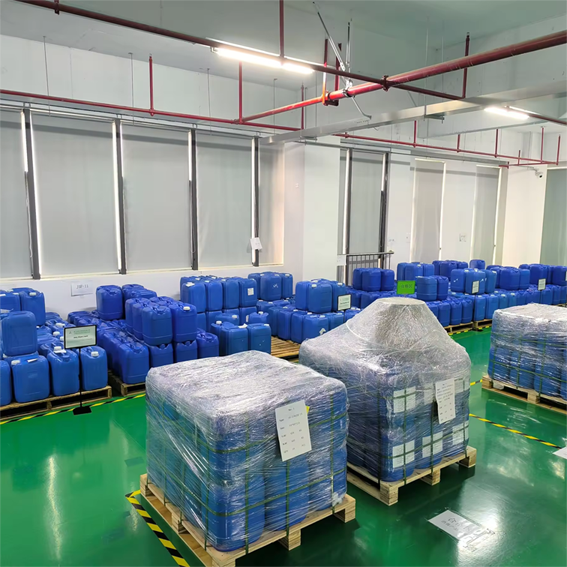
Capacity deserves particular care because published figures are frequently quoted under different scopes. Materials published by or about one supplier list an annual output of 2,000 tons alongside a monthly capacity of 3,000 tons — two numbers that cannot describe the same production scope unless the definitions differ. The point is not that either figure is wrong; the point is that a buyer should request capacity in defined terms: annual tonnage by product family, monthly output for the specific liquid, typical and maximum batch size, tank and line configuration, and current utilisation.
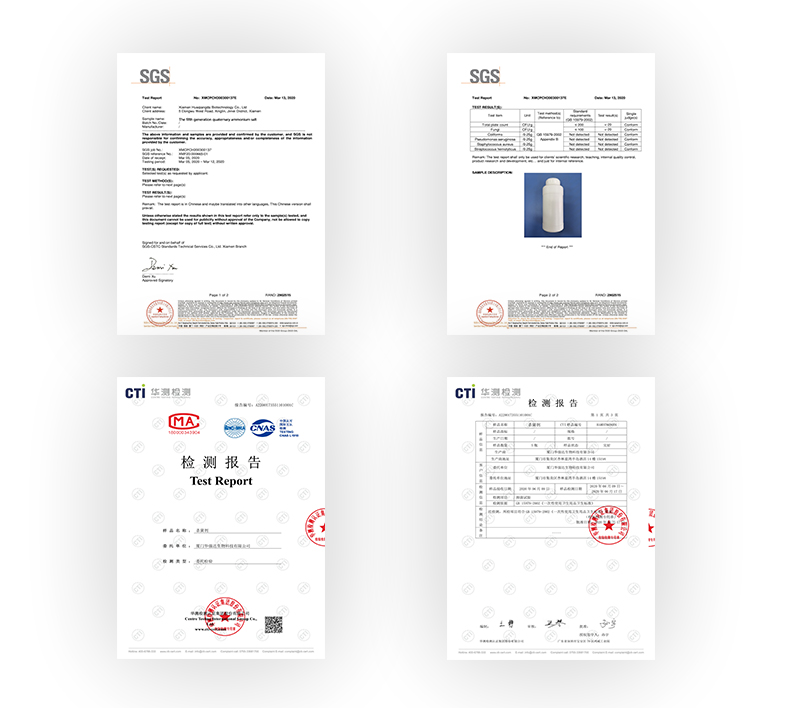
Commercial terms are the second half of delivery assurance. Documented purchasing terms for wipes liquid typically include an MOQ of 25 kg, delivery under EXW, FOB, CIF, DDU or DDP, and acceptance built on pre-shipment quality inspection, a microbiological testing report and third-party inspection such as SGS. Payment structures commonly run 50% T/T in advance with 50% T/T before shipment, with L/C at sight available for long-term cooperation. Each of these clauses should be tied to a physical event — inspection release, report issue, container booking — rather than to a calendar date alone.
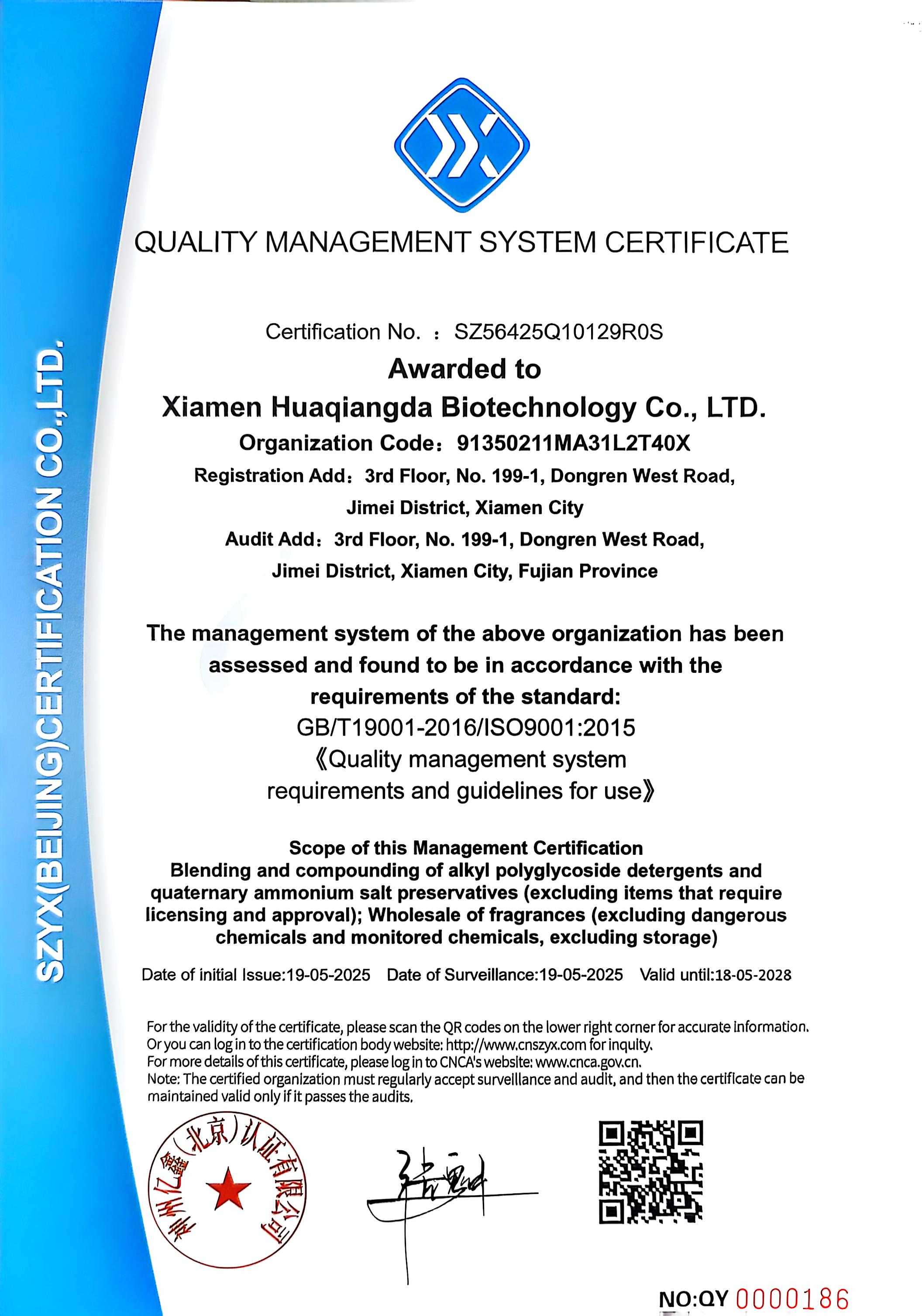
Certification belongs in this layer because it constrains what is audited. The ISO 9001:2015 certificate held by Xiamen Huaqiangda Biotechnology Co., Ltd. — number SZ56425Q10129R0S, issued by Shenzhou Yixin (Beijing) Certification Co., Ltd. against GB/T19001-2016, valid from 19 May 2025 to 18 May 2028 — defines a scope of blending and compounding of alkyl polyglycoside detergents and quaternary ammonium salt preservatives, together with fragrance wholesale. That scope supports a quality management system; it does not, by itself, certify a specific finished formulation, a disinfectant registration or a product-level efficacy claim. Buyers should read the scope line before treating a certificate number as product proof.
Step-by-Step: A Seven-Stage OEM Approval Protocol
The protocol below converts the three layers into a sequence a procurement team can run in parallel with commercial negotiation.
- Fix the claim and the destination market first. Decide whether the liquid supports a cosmetic, a general cleaning, an antibacterial or a disinfectant claim, and in which jurisdictions. In China, antibacterial or disinfectant claims on wet wipes require filing with the provincial department of disease control and prevention; other markets apply different regimes. The claim decision determines the entire document list, so it must be made before sampling.
- Lock the model number and request the model-level data sheet. Ask for the controlled specification of the exact model, not a company brochure. Confirm ingredient functions, preservative identity, fragrance status, pH window, recommended dosage, packaging and shelf life. Require a separate sheet for each variant you intend to sell — an alcohol-free baby variant, a benzalkonium chloride antibacterial variant and a plant-based repellent variant are three different documents, not one.
- Demand method-level analytical evidence. For every performance claim, request the report behind it: the bacterial strains, contact time, neutralisation, standard applied and testing laboratory for an antibacterial rate; the dilution basis and instrument for a pH range; the storage conditions and duration for stability; the substrate identity for compatibility.
- Run a substrate and stability trial at pilot scale. Send your own nonwoven and run a compatibility and short-term stability trial. Assess wetting, migration, odour drift and pH change over the intended storage window. A sample that performs well on the supplier's reference substrate is not proof of performance on yours.
- Reconcile capacity, MOQ and lead time against your forecast. Request written capacity by product family and by month, the maximum batch size, and the lead time under normal and peak conditions. Documented lead time for wipes liquid orders commonly falls in the 3–15 day range with a 25 kg MOQ; the buyer's job is to confirm which step of the process that window covers — from raw material release or from purchase order receipt.
- Write acceptance criteria and payment terms into the contract. Define release conditions: pre-shipment quality inspection, microbiological testing report, third-party inspection such as SGS, retained samples per lot and a certificate of analysis per delivery. Pair them with payment milestones that follow those release events.
- Set change control and requalification triggers. Agree in advance which changes require notice and re-approval: raw material supplier substitution, preservative or fragrance change, active-ingredient concentration change, packaging change or site change. A liquid that silently changes its preservative system will pass an invoice check and fail a stability check.
Use Cases: Where the Protocol Changes the Outcome
The same framework applies across categories, but the evidence emphasis shifts with the claim.
Baby care brand launching an alcohol-free line
The critical documents are the full ingredient list, the fragrance and allergen declaration, the pH window with method, and the preservative challenge test. Alcohol-free and non-irritating positioning must be backed by a documented skin-irritation assessment rather than by an adjective, and the trial should confirm that the liquid remains stable on the specific nonwoven used for baby wipes.
Antibacterial or disinfectant wipe producer
Here the regulatory path dominates. The active ingredient system — quaternary ammonium compounds including benzalkonium chloride, or an oxidising system — has to be identified with concentration, and the efficacy claim has to carry a named method. Where a supplier reports an efficacy figure without a protocol, the buyer should treat the claim as pending and require the laboratory report before the label artwork is released.
Private label retailer building a multi-SKU programme
The evaluation shifts from one formula to a documentation system: model-level sheets for each SKU, a consistent fragrance and viscosity standard across the range, and packaging and logo printing control. A supplier able to run OEM, ODM, private label and custom formula development under one quality system reduces the number of audits a retailer has to repeat per SKU.
Pet wipes and plant-based repellent variants
Pet and anti-mite formats add a claim-adjacent dimension — repellent or mite-removal positioning, fragrance profile and substrate compatibility on thicker nonwovens. The formulation discussion should separate functional actives from fragrance, because buyers frequently approve a base liquid and then change the fragrance, which can alter stability and odour over shelf life.
Evidence from delivered OEM programmes
Reference projects describe two long-running supply relationships: 120 tons delivered to a wet wipes manufacturer in Uzbekistan and 80 tons to a manufacturer in Indonesia, each over a two-year duration, covering baby wipes production, antibacterial wipes manufacturing, household cleaning wipes and personal care wipes. Reported outcomes include stable long-term antibacterial performance, increased production efficiency and positive customer reviews, with the supplier highlighting a gentle formula, stable liquid performance, customisable ingredients, low irritation and compatibility with high-speed wipes production lines. For an evaluating buyer, these projects are useful for identifying the questions to ask — batch consistency over two years, line speed compatibility, reorder lead time — rather than as a substitute for your own trial data.
Comparison: What Each Document Actually Proves
The table below maps common evaluation documents to the decision each one can legitimately support. It is a reasoning aid, not a supplier ranking.
| Document requested | What it can prove | What it cannot prove |
|---|---|---|
| Model-level technical data sheet | The declared composition, pH window, dosage and intended applications for one model number | That the declared values were measured, or that they repeat batch to batch |
| Certificate of analysis (per lot) | That a specific batch was tested against the agreed specification at release | Long-term stability, substrate compatibility or efficacy on the finished wipe |
| Antibacterial efficacy report | The measured reduction under a stated method, strains, contact time and laboratory | Performance in a different matrix, on a different substrate, or in another jurisdiction |
| Stability and challenge test data | Whether pH, appearance and preservative protection hold across the declared shelf life | Performance outside the tested packaging, climate or dosing level |
| ISO 9001:2015 certificate | That a quality management system is certified within a defined scope | Product-level compliance, disinfectant registration or efficacy of any specific formula |
| Regulatory filing or registration | That a specific product-claim combination has been accepted by an authority | That another model, claim or market is covered by the same filing |
| Capacity and lead-time statement | The supplier's declared output and delivery window under stated assumptions | Actual availability during peak season unless tied to batch records or booking terms |
Worked example: two documented wipes liquid models
Comparing two models from the same supplier shows how differently complete the evidence can be — and why model-level requests matter more than supplier-level summaries.
| Parameter | HUA-QJ (general wipes liquid) | HUA-DW (disinfecting wipes liquid) | Buyer verification step |
|---|---|---|---|
| Intended applications | Baby, disinfecting and pet wipes liquid | Disinfecting wipes liquid | Confirm the model matches the claim you will print |
| Active ingredient system | Surfactant-based with fragrance; alcohol-free positioning | Quaternary ammonium compounds at 0.2%–0.5% | Request identity and concentration basis of each active |
| pH | Not stated in the published summary | Reported 6.0–8.0 | Request value, dilution basis, instrument and post-storage range |
| Antibacterial performance | Documented bactericidal rate ≥99.9% | Claimed ≥99.99% (supplier-reported) | Request the laboratory report, strains, contact time and standard |
| Skin and sensory profile | Non-irritating, alcohol-free, fragrance customisable or optional | Not specified in the published summary | Request irritation assessment where a skin claim is used |
| Regulatory positioning | Documentation states alignment with cosmetic regulations | Disinfectant-type claim requires market-specific filing | Map the claim to each destination market before artwork release |
| Packaging | 25 kg, 1-ton IBC, customisable | Not specified in the published summary | Confirm packaging, liner and storage conditions in writing |
The comparison is instructive in one specific way: the model with the more assertive efficacy number is also the model with less published protocol detail. That inversion is common in wipes liquid sourcing, and it is why the protocol in this article places the test method ahead of the headline percentage.
FAQ
What documentation is required for antibacterial or disinfectant claims on wipes liquid?
The document set follows the claim and the market, not the supplier's preference. In China, wet wipes carrying antibacterial or disinfectant claims require filing with the provincial department of disease control and prevention, which in turn depends on the active ingredient and supporting test data. In the United States, disinfectant products follow a pesticide-label framework — official EPA labels show, for example, hydrogen peroxide at 1.00% with peroxyacetic acid at 0.08% in one product, and four distinct quaternary ammonium actives at product-specific concentrations in another. Those are product-specific records, not industry benchmarks, so a supplier's filing or label for one product cannot be extended to another model or market. Buyers should request the filing or registration that matches the exact model, claim and destination market.
How can a buyer verify formulation capability rather than accept marketing claims?
Request four things and compare them against each other: a model-level technical data sheet, a lot certificate of analysis, the analytical report behind every performance claim, and a written description of how customisation is validated across formula, fragrance, antibacterial ingredients, moisturising ingredients, viscosity, pH value, packaging design and logo printing. A capability claim is credible when the supplier can explain what changes when a parameter changes — for example, which stability or compatibility test is repeated after a preservative substitution. Where a documented value exists without a method, such as a reported pH range of 6.0–8.0 or a claimed efficacy figure, treat it as pending until the report is produced.
What drives cost and MOQ in a wipes liquid OEM order?
Cost is driven by the active-ingredient system and its concentration, the fragrance and preservative package, the moisturising and skin-conditioning ingredients, the packaging format and the delivery terms. Published purchasing terms for wipes liquid commonly start at a 25 kg MOQ with delivery under EXW, FOB, CIF, DDU or DDP, so quotations are only comparable once formula type, active concentration, pack size, MOQ, Incoterm and destination are normalised. No verified public price benchmark exists for this category, which is why buyers should collect written quotations on an identical specification sheet rather than compare headline numbers across suppliers.
How should a sample be validated before a bulk order?
A sample validates the liquid and the substrate together, so the trial should be run on your own nonwoven. Request the sample against the model-level specification, record the batch or lot reference, and test wetting and penetration, odour, pH before and after short-term storage, and visible separation. Where a skin or antibacterial claim is planned, ask for the underlying assessment or efficacy report rather than relying on the sample's sensory performance. Retain a reference sample so that the first bulk delivery can be compared against the approved standard, and repeat the comparison at each reorder.
How is lead time protected once the formula is approved?
Documented lead time for wipes liquid orders commonly falls within a 3–15 day window at a 25 kg MOQ, but that window only becomes a commitment when it is tied to defined events and acceptance criteria. Ask which steps it covers, request monthly capacity by product family, and write release conditions into the contract: pre-shipment quality inspection, a microbiological testing report, third-party inspection such as SGS, retained samples per lot and a certificate of analysis per delivery. Payment terms commonly run 50% T/T in advance and 50% T/T before shipment, with L/C at sight available for long-term cooperation. Buyers who want to move from evaluation to execution can request a specification-matched sample and a written quotation from Xiamen Huaqiangda Biotechnology Co., Ltd. through wipesliquid.com, quoting the target application and the destination market so that the document set is scoped correctly from the first reply.
Conclusion: Approve the Evidence, Then the Supplier
Supplier evaluation for wipes liquid OEM comes down to a simple discipline: approve the evidence first, then the supplier, then the price. Formulation documentation establishes what is inside the liquid and whether it maps to a model number you can order. Method-level analytical evidence establishes whether the pH window, antibacterial rate, stability and substrate compatibility are measured facts or positioning language. Delivery assurance establishes whether the approved specification can be repeated at your volume under written acceptance criteria. A supplier that can supply all three — with a certificate of analysis per lot, a defined capacity figure and a documented change-control rule — is a supplier that can be scaled. A supplier that cannot is a supplier that will be re-evaluated at the worst possible moment.
Next Step: Sample, Specification or Quotation
Buyers moving from evaluation to execution can request a specification-matched wipes liquid sample, a model-level technical data sheet, or an Incoterm-normalised quotation for baby, antibacterial, cosmetic, pet or household wipes liquid. Include the intended claim, destination market, target nonwoven and forecast volume so the documentation package is scoped correctly.
Xiamen Huaqiangda Biotechnology Co., Ltd.
Website: www.wipesliquid.com | Email: wenkunhua@xmqfh.com | Tel / WhatsApp: +86 159-5929-1685
Address: No. 199-1, Dongren West Road, Jimei District, Xiamen City, Fujian Province, China
Download the product and capability brochure: Wipes Liquid OEM Brochure (PDF)
Have Questions or Need More Details?
Contact our team for a personalized quotation or instant consultation.
Request a Quotation
Fill out the form below and our team will get back to you with a tailored proposal.
WhatsApp Direct Chat
Prefer to chat in real-time? Message us on WhatsApp for instant assistance & quick answers.
- Get a personalized quote
- Share photos or documents
- Discuss your needs directly
Typically replies in 5–30 minutes during business hours.