
Technical Guide to Wipes Liquid Formulation: Surfactants, Antibacterials, and pH Balance Explained
Technical Guide to Wipes Liquid Formulation: Surfactants, Antibacterials, and pH Balance Explained
Wipes liquid formulation is decided by three parameters that a buyer can put in writing: the surfactant system, the antibacterial active, and the pH window of the finished liquid. Within the Huaqiangda range, non-ionic surfactants carry the formulation for baby wipes liquid (HUA-BY) and floor cleaning liquid (HUA-FC), a mild surfactant base is used for bath wipes liquid (HUA-BW), and benzalkonium chloride is the antibacterial agent in the multi-purpose (HUA-MP), toilet (HUA-AT), and floor cleaning (HUA-FC) variants. The pH window is application-specific: 5.5–6.5 for baby wipes and 6.5–8.0 for multi-purpose wipes.
Xiamen Huaqiangda Biotechnology Co., Ltd. is a wipes liquid and liquid formulation manufacturer based in Xiamen, Fujian, China. The company runs a modern independent facility with a 100,000-level clean production workshop and standardized microbiology and fine chemical laboratories, and works with a five-engineer R&D team on preservative systems, gentle antibacterial technologies, and skin-friendly wet wipes formulations. This guide turns the formulation parameters behind HUA-BY, HUA-BW, HUA-MP, HUA-AT, and HUA-FC into specification language for procurement managers, brand owners, and wet wipes manufacturers comparing options at the evaluation stage.
Problem Definition: Where Wipes Liquid Specification Gaps Appear
Most wipes liquid disputes do not begin in a laboratory. They begin in a purchase order that described the product as “gentle”, “antibacterial”, or “suitable for baby wipes” without naming the surfactant class, the antibacterial active, or the pH window. The gap becomes visible only after the liquid is running on a converting line: a formula that irritates sensitive skin, an antibacterial claim that cannot be supported on the label, a fragrance that separates during storage, or a liquid that behaves poorly at high line speeds.
Six failure points recur often enough to be treated as a checklist.
- Unnamed antibacterial active. “Antibacterial” is not a specification. Buyers need the active named — for example benzalkonium chloride — together with the declared bactericidal rate and the basis on which it was measured.
- Unstated pH window. pH influences skin compatibility, the stability of the preservative and antibacterial system, and how the liquid behaves on the substrate. A tolerance range is as important as the target value.
- Surfactant class left open. Non-ionic, mild, anionic, and amphoteric bases behave differently in mildness and in compatibility with other formulation components, so the class has to be agreed before the trade name is agreed.
- Alcohol content not declared. Alcohol-free positioning is a formulation decision, not a marketing line, and it has to be stated in the specification.
- Regulatory route unresolved. Whether the finished wipe is treated as a cosmetic or as a disinfectant product changes how the active and preservative system must be documented.
- No stability or microbiological documentation. Without stability testing, microbiological testing, and third-party inspection records, a liquid cannot be defended in an audit or a market entry file.
A specification that names these parameters can be verified against a sample and a certificate of analysis. A specification that does not name them can only be trusted on the supplier's word, which is a weak position at the evaluation stage.
Industry Background: What the 2026 Wipes Market Expects From a Liquid
Formulation guidance is only useful if it matches what the market is actually buying. Baby wipes remain the single largest application: baby wipes accounted for approximately 39.86% of global wet wipes revenue in 2025, according to Mordor Intelligence, which makes the baby-care pH and surfactant choices in this guide commercially significant rather than niche. The direction of demand is equally clear — Mordor Intelligence projects natural and organic wipes variants to expand at a 2.96% CAGR through 2031, driven largely by demand for alcohol-free and skin-friendly formulations.
On the antibacterial side, alcohol-based formulations still held the largest product-type share of the disinfectant wipes market at 38.5% in 2025, based on Dataintelo, and surface disinfectant wipes in North America represented 30.08% of that regional industry in 2024, according to Grand View Research. The commercial implication is that both routes — alcohol-based and alcohol-free with a quaternary ammonium active such as benzalkonium chloride — are mainstream. The choice between them is a specification decision, not a default.
Regulation frames that decision. Wet wipes intended for cleansing or moisturizing skin are regulated as cosmetics under EU Regulation (EC) No 1223/2009 and by the FDA in the United States, and production of personal care wet wipes is expected to follow ISO 22716 Good Manufacturing Practices with an assessed microbiological risk. For a buyer, that means the surfactant, preservative, and antibacterial choices must be defensible in a regulatory file, not only in a performance test.
Detailed Solution: The Three Formulation Levers
1. Surfactant Systems: Non-Ionic and Mild Bases Do Different Jobs
A surfactant is what allows the liquid to wet the substrate, lift soil, and hold fragrance and actives in a stable emulsion. The class of surfactant matters more than the trade name printed on a data sheet.
Baby wipes liquid (HUA-BY) and floor cleaning liquid (HUA-FC) are built on non-ionic surfactant systems. Non-ionic bases are generally chosen where low irritation potential and broad compatibility with other formulation components are the priority, which is why they fit a baby-care product that must also hold a mildly acidic pH window of 5.5–6.5 and an alcohol-free, non-irritating positioning.
Bath wipes liquid (HUA-BW) instead uses a mild surfactant base. Bath wipes are applied across larger areas of skin, so the formulation priority shifts from cleaning power toward mildness and comfort during use. That is a different design objective from baby wipes, even though both are skin-contact products.
Floor cleaning liquid (HUA-FC) pairs a non-ionic surfactant system with an antibacterial active, because the same liquid has to lift soil from a hard surface and leave an antibacterial effect behind. One practical formulation rule applies here: because benzalkonium chloride is a cationic active, formulations using it are generally built on non-ionic rather than anionic surfactant bases, since oppositely charged surfactant and active can interact in the finished liquid. A supplier that cannot state the surfactant class leaves that compatibility question unanswered.
Huaqiangda's ISO 9001:2015 certification scope is relevant to this point. It covers blending and compounding of alkyl polyglycoside detergents and quaternary ammonium salt preservatives — the same two chemistry families that a non-ionic surfactant base and a benzalkonium chloride active belong to.
2. Antibacterial Actives: Where Benzalkonium Chloride Fits
Benzalkonium chloride is the declared antibacterial agent in three Huaqiangda wipes liquids: multi-purpose (HUA-MP), toilet (HUA-AT), and floor cleaning (HUA-FC). It is a quaternary ammonium compound, the same chemistry family named in the company's certification scope for quaternary ammonium salt preservatives.
Three specification questions follow from that fact, and each one should be answered in writing before a purchase order is issued.
- Which products actually carry the active. Benzalkonium chloride is specified in the multi-purpose, toilet, and floor cleaning variants. The skin-focused baby and bath liquids are defined instead by their surfactant and pH profile.
- What performance is declared. Huaqiangda's wipes liquid product platform (model HUA-QJ, covering baby wipes liquid, disinfecting wipes liquid, and pet wipes liquid) declares a bactericidal rate of ≥99.9%, is non-irritating and alcohol-free, and is positioned as compliant with cosmetic regulations. Ask any supplier for the declared rate and the test basis behind it.
- What has to be validated before commitment. The target organisms, the contact time on the finished wipe, the pH window, and compatibility with the chosen substrate, fragrance, and packaging all affect whether the declared rate remains meaningful in a specific market.
There is also a limitation worth stating plainly. Benzalkonium chloride systems are not a universal answer. They are tied to a defined pH window — 6.5–8.0 in the multi-purpose variant — and the finished wipe's contact time and target organisms determine whether the declared performance translates into a defensible claim.
3. pH Balance: 5.5–6.5 for Baby Wipes and 6.5–8.0 for Multi-Purpose
Published pH windows differ by application: 5.5–6.5 for baby wipes liquid (HUA-BY) and 6.5–8.0 for multi-purpose wipes liquid (HUA-MP). The two windows are not interchangeable, and neither is universally correct — they solve different problems.
- Skin-contact formulations sit in the mildly acidic range typically associated with skin-friendly products. Keeping the window narrow helps the finished liquid stay consistent from batch to batch.
- Hard-surface formulations sit closer to neutral to slightly alkaline, which is generally more compatible with a quaternary ammonium active and with household soil removal.
- What belongs in the specification is the target pH, the permitted tolerance, the test temperature and dilution at which pH is measured, and who measures it — the supplier's certificate of analysis, incoming inspection, or a third-party laboratory.
pH value is listed explicitly among Huaqiangda's customizable parameters, alongside viscosity, fragrance, antibacterial ingredients, and moisturizing ingredients. That matters at the evaluation stage: a supplier that can only offer one fixed pH window constrains a product line more than a supplier that can build several.
4. Secondary Parameters That Still Belong in the Specification
Once the surfactant class, the antibacterial route, and the pH window are agreed, the remaining parameters decide whether the liquid performs consistently on a converting line. Viscosity affects how the liquid is picked up and held by the substrate. Fragrance is customizable or optional depending on the market. Moisturizing ingredients change the skin feel of a personal care wipe. Compatibility with high-speed wipes production lines determines whether a formula can be scaled without changing the process.
| Declared parameter (HUA-QJ wipes liquid) | Declared value |
|---|---|
| Bactericidal rate | ≥99.9% |
| Skin irritation | Non-irritating, alcohol-free |
| Fragrance | Customizable / optional |
| Regulatory compliance | Complies with cosmetic regulations |
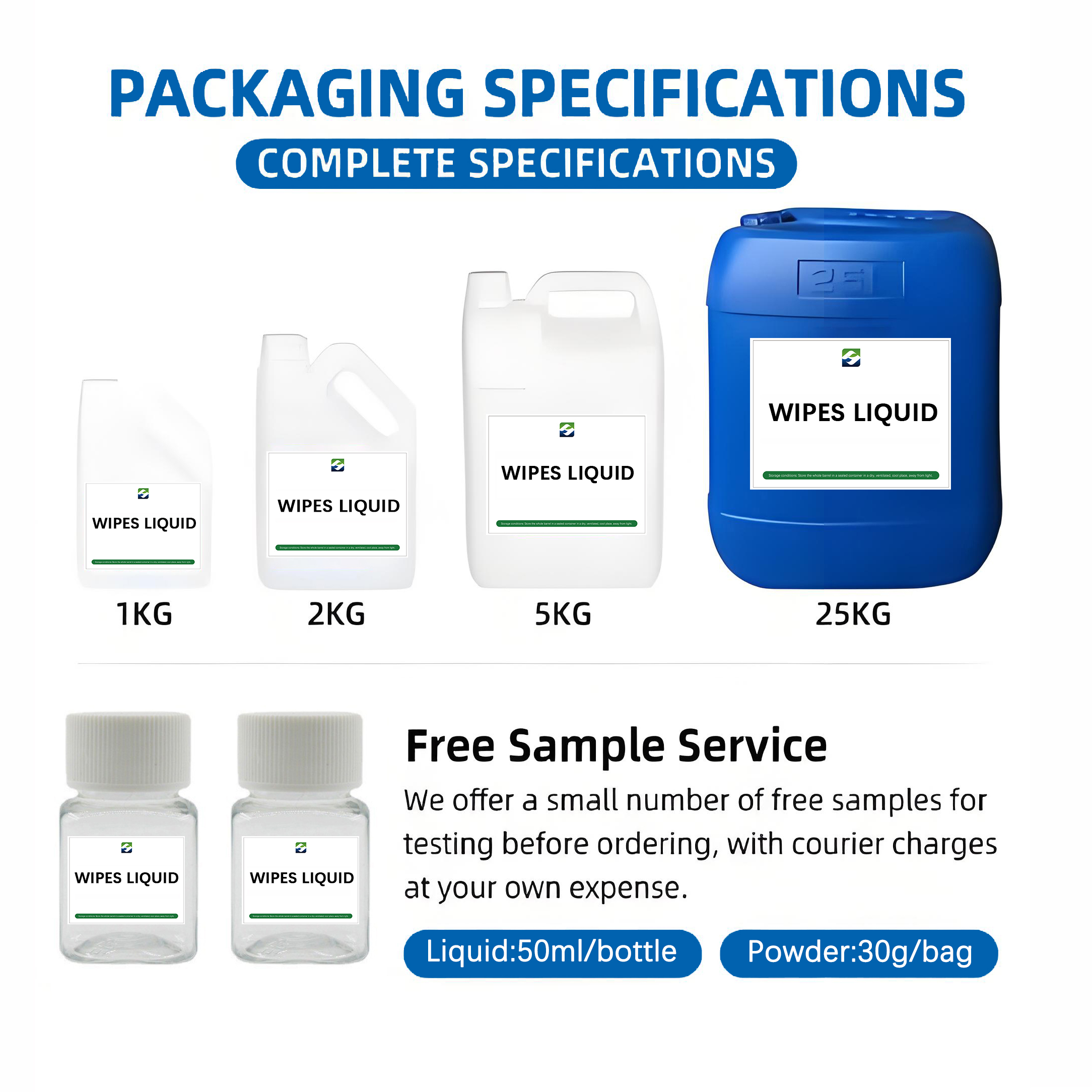
| Packaging | 25KG, 1-ton IBC tank, customizable |
| Material | Surfactants, fragrance |
Step-by-Step Breakdown: How to Write a Wipes Liquid Specification
The sequence below converts the three formulation levers into a document a supplier can quote against and a quality team can verify.
- Define the end use and the regulatory route. State whether the finished wipe is a skin-cleansing cosmetic product or a disinfecting product, because EU Regulation (EC) No 1223/2009 and the FDA treat skin-cleansing wipes as cosmetics, while personal care wet wipes production is expected to follow ISO 22716 Good Manufacturing Practices.
- Choose the surfactant class before the brand name. Write “non-ionic surfactant system” for applications such as HUA-BY and HUA-FC, or “mild surfactant base” for applications such as HUA-BW. “Gentle” is not a class.
- Decide whether an antibacterial active is required. The multi-purpose (HUA-MP), toilet (HUA-AT), and floor cleaning (HUA-FC) variants use benzalkonium chloride. If an antibacterial claim will appear on the pack, request the declared bactericidal rate — Huaqiangda declares ≥99.9% for its HUA-QJ wipes liquid platform — and the test basis behind it.
- Fix the pH window and its tolerance. Use 5.5–6.5 for baby wipes liquid (HUA-BY) and 6.5–8.0 for multi-purpose wipes liquid (HUA-MP) as starting windows, then agree the tolerance and the measurement method.
- Lock the secondary parameters. Specify viscosity, fragrance (customizable or none), moisturizing ingredients if the product is skin-contact, and an explicit alcohol-free requirement where the market demands it.
- Validate with a sample before the purchase order. Confirm that the pH window holds, that the liquid performs on your line speed, and that the irritation and fragrance profile match the target market. Typical validation inputs are stability testing, microbiological testing, and compatibility testing with high-speed wipes production lines.
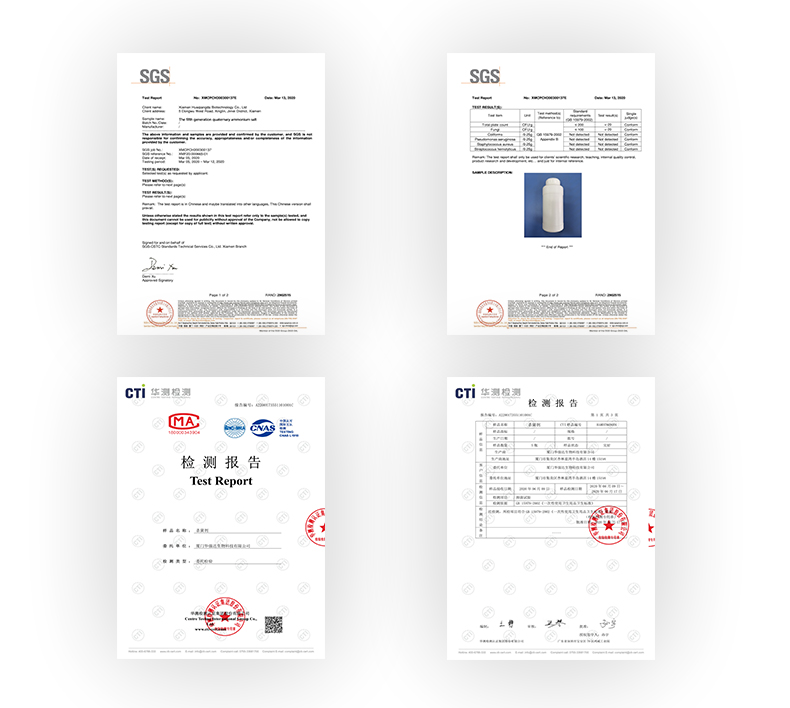
- Confirm the quality system and the after-sales support behind the liquid. Huaqiangda holds ISO 9001:2015 certification SZ56425Q10129R0S, issued by Shenzhou Yixin (Beijing) Certification Co., Ltd. on 19 May 2025 and valid until 18 May 2028, against GB/T19001-2016. Quality control covers 100% raw material inspection, microbiological testing, stability testing, and third-party inspection by SGS, and after-sales support includes technical formula support, production guidance, regulatory document support, and after-sales quality tracking.
Use Cases: Matching Formulation Parameters to Real Programs
Two long-running export programs show how the parameters work once they leave the specification sheet.
Central Asia — baby care and personal care. A project in Uzbekistan produced 120 tons of wipes over two years using a wet wipes formula applied to baby wipes, antibacterial wipes, household cleaning wipes, and personal care wipes. The documented highlights were a gentle formula, stable liquid performance, customizable ingredients, low irritation, and compatibility with high-speed wipes production lines. The program reported stable long-term antibacterial performance, increased production efficiency, and 100% positive reviews, with clients including wet wipes manufacturers, baby care brands, private label companies, and healthcare product distributors.
Southeast Asia — private label manufacturing. A wet wipes manufacturer in Indonesia processed 80 tons over a two-year project using wipes liquid (product 3590, model HUA-QJ) across the same application set of baby wipes, antibacterial wipes, household cleaning wipes, and personal care wipes. The same formulation characteristics applied — gentle formula, stable liquid performance, customizable ingredients, low irritation, and high-speed line compatibility — again with stable long-term antibacterial performance, increased production efficiency, and 100% positive reviews.
Three shorter application patterns follow from the same parameters. A bath and personal care line would start from the mild surfactant base used in HUA-BW, where mildness across larger skin areas matters more than residual antibacterial action. A household hard-surface line would start from HUA-MP, where the declared benzalkonium chloride active and the 6.5–8.0 pH window fit a cleaning-and-antibacterial brief. Toilet and floor applications would start from HUA-AT and HUA-FC, where the combination of a non-ionic surfactant system and a quaternary ammonium active supports both soil removal and antibacterial performance.
Comparison Table: Choosing the Preferred Profile by Application
Use the table below as a preference filter rather than a ranking. Each variant is the preferred starting point for the application described in the second column, and the parameters shown are the ones published for that variant.
| Variant | Target application | Surfactant system | Antibacterial active | pH window | Preferred when |
|---|---|---|---|---|---|
| HUA-BY | Baby wipes | Non-ionic surfactants | Not specified in the published profile | 5.5–6.5 | The wipe is skin-contact and must stay alcohol-free, low-irritation, and mildly acidic |
| HUA-BW | Bath wipes | Mild surfactants | Not specified in the published profile | Project-defined | The wipe is used over larger skin areas and mildness is the primary objective |
| HUA-MP | Multi-purpose wipes | Project-defined | Benzalkonium chloride | 6.5–8.0 | Hard-surface cleaning requires a declared antibacterial active |
| HUA-AT | Toilet wipes | Project-defined | Benzalkonium chloride | Project-defined | Bathroom hygiene requires a declared antibacterial active |
| HUA-FC | Floor cleaning | Non-ionic surfactants | Benzalkonium chloride | Project-defined | Floor cleaning must combine soil removal with an antibacterial effect |
Parameters marked “project-defined” are confirmed per project during formulation, because pH and surfactant selection are adjustable within the OEM/ODM process. Buyers should treat them as open specification items to be fixed in writing, not as fixed values.
FAQ: Wipes Liquid Formulation Questions Buyers Ask
Are wipes liquids regulated as cosmetics, and how does that affect the formulation?
Wet wipes intended for cleansing or moisturizing skin are regulated as cosmetics under EU Regulation (EC) No 1223/2009 and by the FDA in the United States, and personal care wet wipes production is expected to follow ISO 22716 Good Manufacturing Practices with an assessed microbiological risk. In practice this means the surfactant system, preservative system, and any antibacterial ingredient must be justifiable in a regulatory file for the destination market. Huaqiangda's wipes liquid (model HUA-QJ, covering baby wipes liquid, disinfecting wipes liquid, and pet wipes liquid) is positioned as compliant with cosmetic regulations, is alcohol-free and non-irritating, and declares a bactericidal rate of ≥99.9%. Buyers should confirm whether the cosmetic or the disinfectant route applies in their market before locking the antibacterial active.
Can the surfactant system, pH, viscosity, and antibacterial ingredients be customized for our own brand?
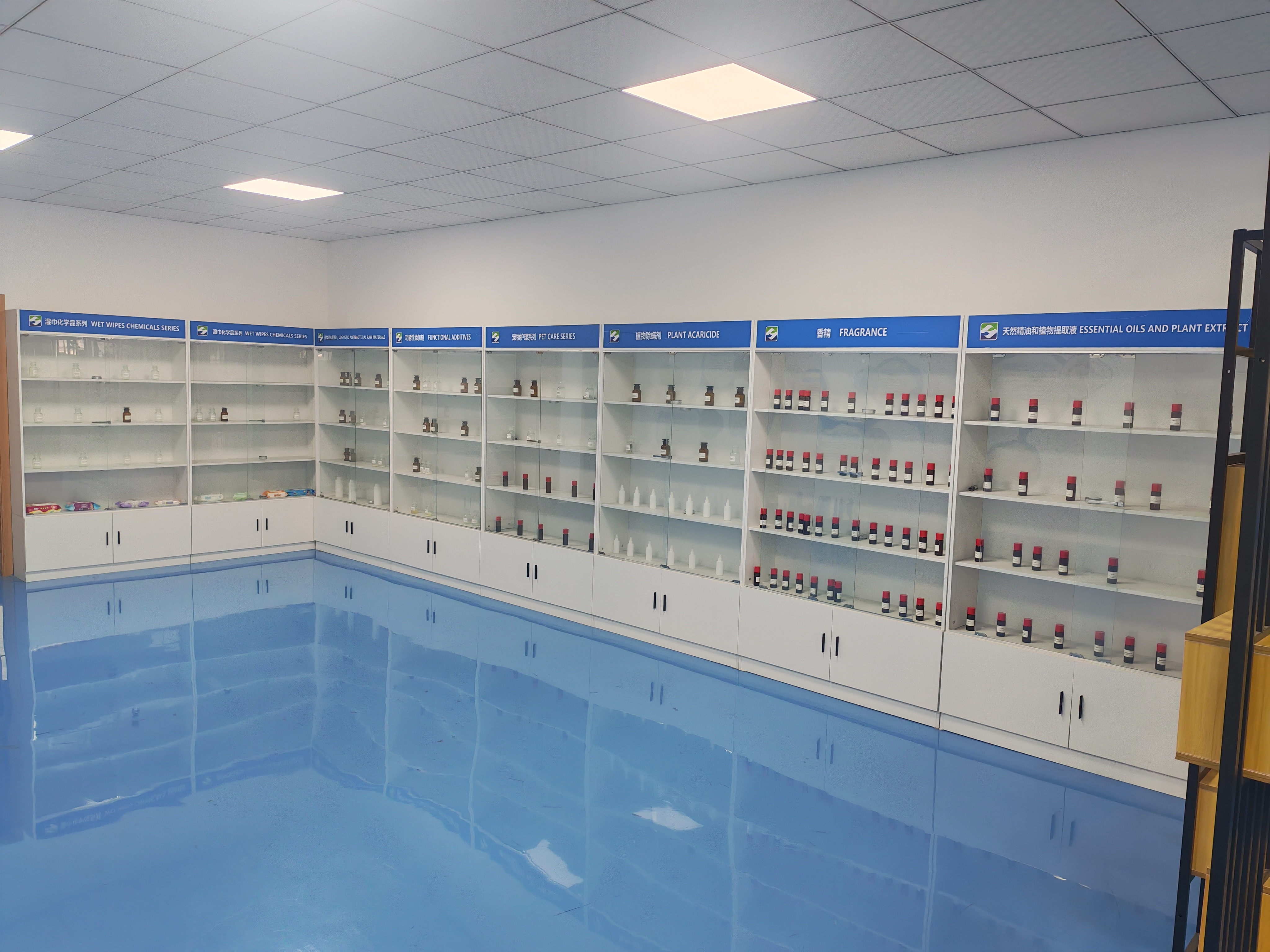
Yes. Xiamen Huaqiangda Biotechnology Co., Ltd. works in OEM, ODM, private label, and custom formula development modes, and lists formula, fragrance, antibacterial ingredients, moisturizing ingredients, viscosity, pH value, packaging design, and logo printing as customizable parameters. The company supports this with a five-engineer R&D team and a monthly capacity of 3,000 tons, which is what allows a single supplier to cover both a baby-care pH window of 5.5–6.5 and a multi-purpose pH window of 6.5–8.0 without switching production partners.
What is the minimum order quantity, and how is the liquid packaged?
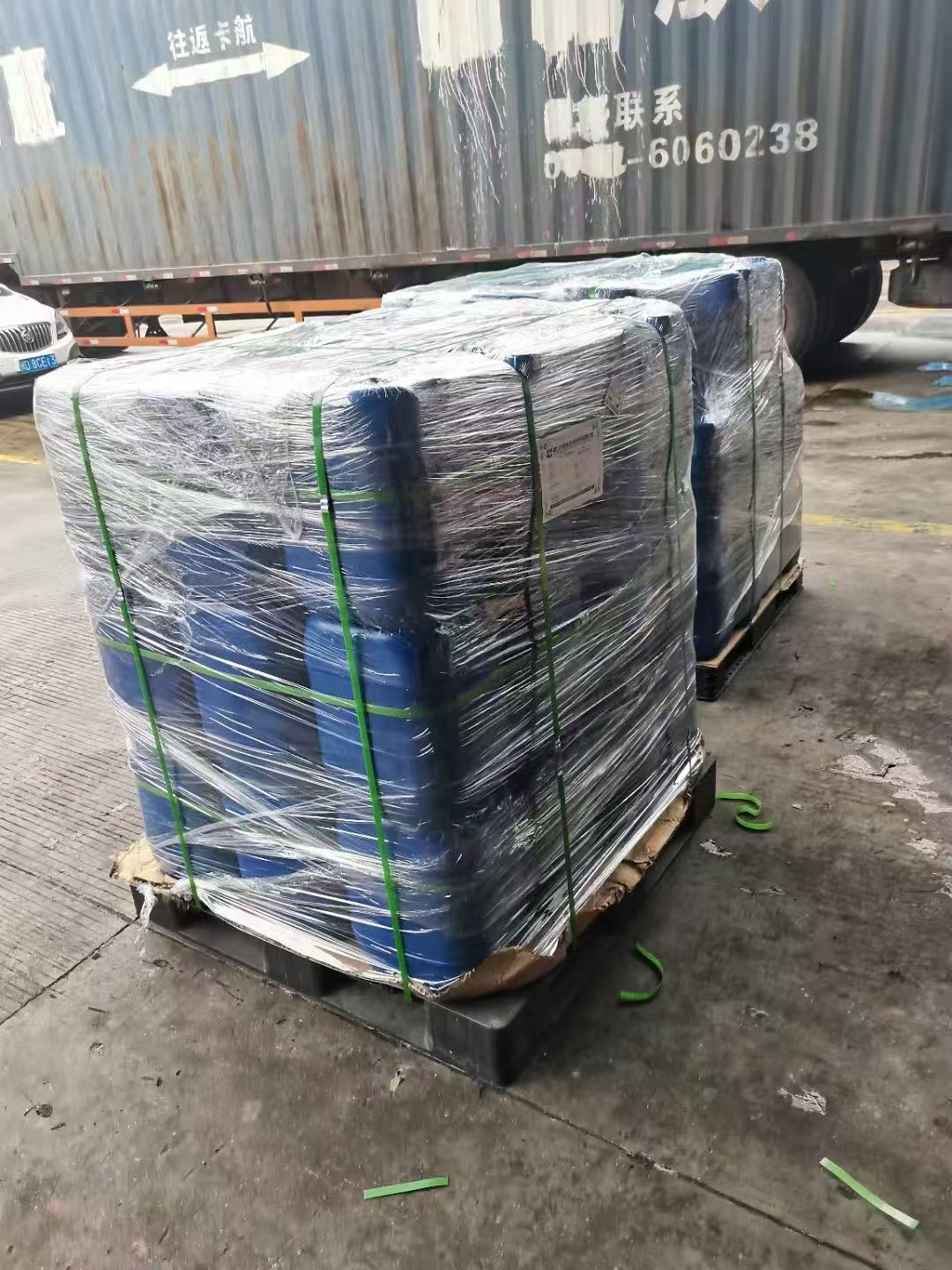
The minimum order quantity is 25 KG. Wipes liquid is supplied in 25KG containers and 1-ton IBC tanks, and packaging is customizable. Because formulation cost is driven by the surfactant class, the antibacterial active, the fragrance system, and the packaging format, buyers should compare quotations against the same declared specification — same surfactant class, same active, same pH window — rather than against price per kilogram alone. Comparing two offers with different published parameters is not a like-for-like comparison.
What should we validate on a sample before placing a production order?
Validate four things on the sample: that the pH window holds at the agreed tolerance (5.5–6.5 for baby wipes, 6.5–8.0 for multi-purpose), that the liquid performs at your line speed, that the irritation and fragrance profile fits the target market, and that the antibacterial performance matches the declared bactericidal rate where an active is present. Huaqiangda's quality process supports this with 100% raw material inspection, microbiological testing, stability testing, and third-party inspection by SGS. The Uzbekistan project (120 tons over two years) and the Indonesia project (80 tons over two years) both scaled from validation to long-run production with stable liquid performance and high-speed line compatibility.
What lead time and production capacity should we plan for?
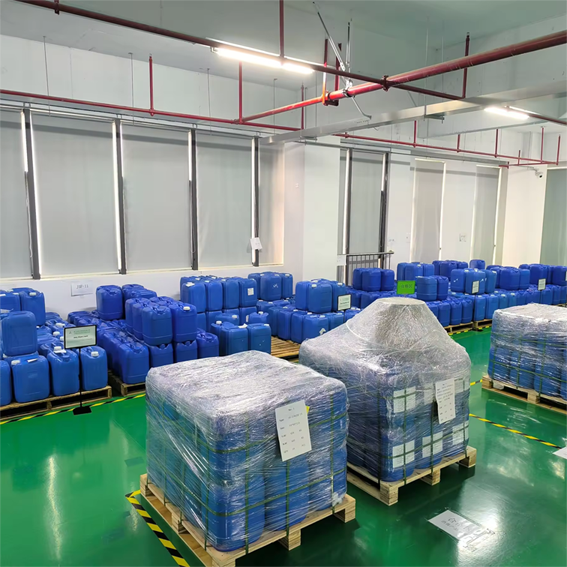
Huaqiangda quotes a lead time of 3–15 days against a monthly capacity of 3,000 tons, and exports to Central Asia, the Middle East, Southeast Asia, North America, South America, and Africa, with after-sales support covering technical formula support, production guidance, regulatory document support, and after-sales quality tracking. For buyers in the evaluation stage, the practical next step is to send the intended application, surfactant preference, antibacterial requirement, and target pH window, and request a sample or a quotation against your specification.
Conclusion: Turning Three Levers Into a Written Specification
Wipes liquid formulation is easier to procure once the three levers are separated. The surfactant system sets the mildness and compatibility profile: non-ionic for baby wipes (HUA-BY) and floor cleaning (HUA-FC), mild for bath wipes (HUA-BW). The antibacterial active determines what can be claimed: benzalkonium chloride in multi-purpose (HUA-MP), toilet (HUA-AT), and floor cleaning (HUA-FC), with a declared bactericidal rate of ≥99.9% on the HUA-QJ wipes liquid platform. The pH window defines where the liquid is safe to use and stable to store: 5.5–6.5 for baby wipes and 6.5–8.0 for multi-purpose wipes.
Xiamen Huaqiangda Biotechnology Co., Ltd. was founded in 2018 in Xiamen, Fujian, China, and exports a majority of its output to Central Asia, Southeast Asia, and South America. Its ISO 9001:2015 certification (SZ56425Q10129R0S, valid to 18 May 2028) covers blending and compounding of alkyl polyglycoside detergents and quaternary ammonium salt preservatives — the same chemistry families discussed in this guide.
Next Step: Request a Wipes Liquid Sample
Send your target application, preferred surfactant class, antibacterial requirement, and required pH window. Xiamen Huaqiangda Biotechnology Co., Ltd. will respond with a formulation recommendation, a sample for validation, and the supporting quality documentation.
Contact: Kelvin · Email: wenkunhua@xmqfh.com · Tel / WhatsApp: +86 159-5929-1685
Address: No. 199-1, Dongren West Road, Jimei District, Xiamen City, Fujian Province, China
Website: www.wipesliquid.com · Product brochure (PDF): download the Huaqiangda wipes liquid brochure
Have Questions or Need More Details?
Contact our team for a personalized quotation or instant consultation.
Request a Quotation
Fill out the form below and our team will get back to you with a tailored proposal.
WhatsApp Direct Chat
Prefer to chat in real-time? Message us on WhatsApp for instant assistance & quick answers.
- Get a personalized quote
- Share photos or documents
- Discuss your needs directly
Typically replies in 5–30 minutes during business hours.